
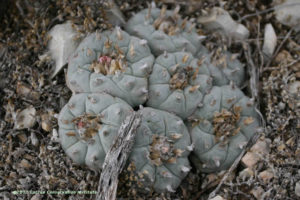
What are the genetics of the known populations of Astrophytum and Lophophora?
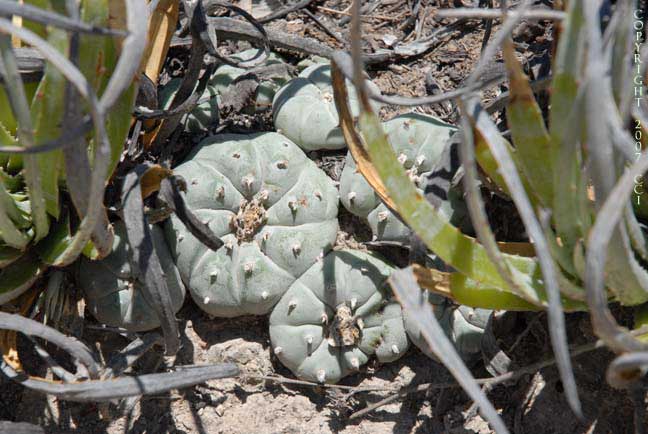
What is the biochemistry and chemistry of Astrophytum and Lophophora?
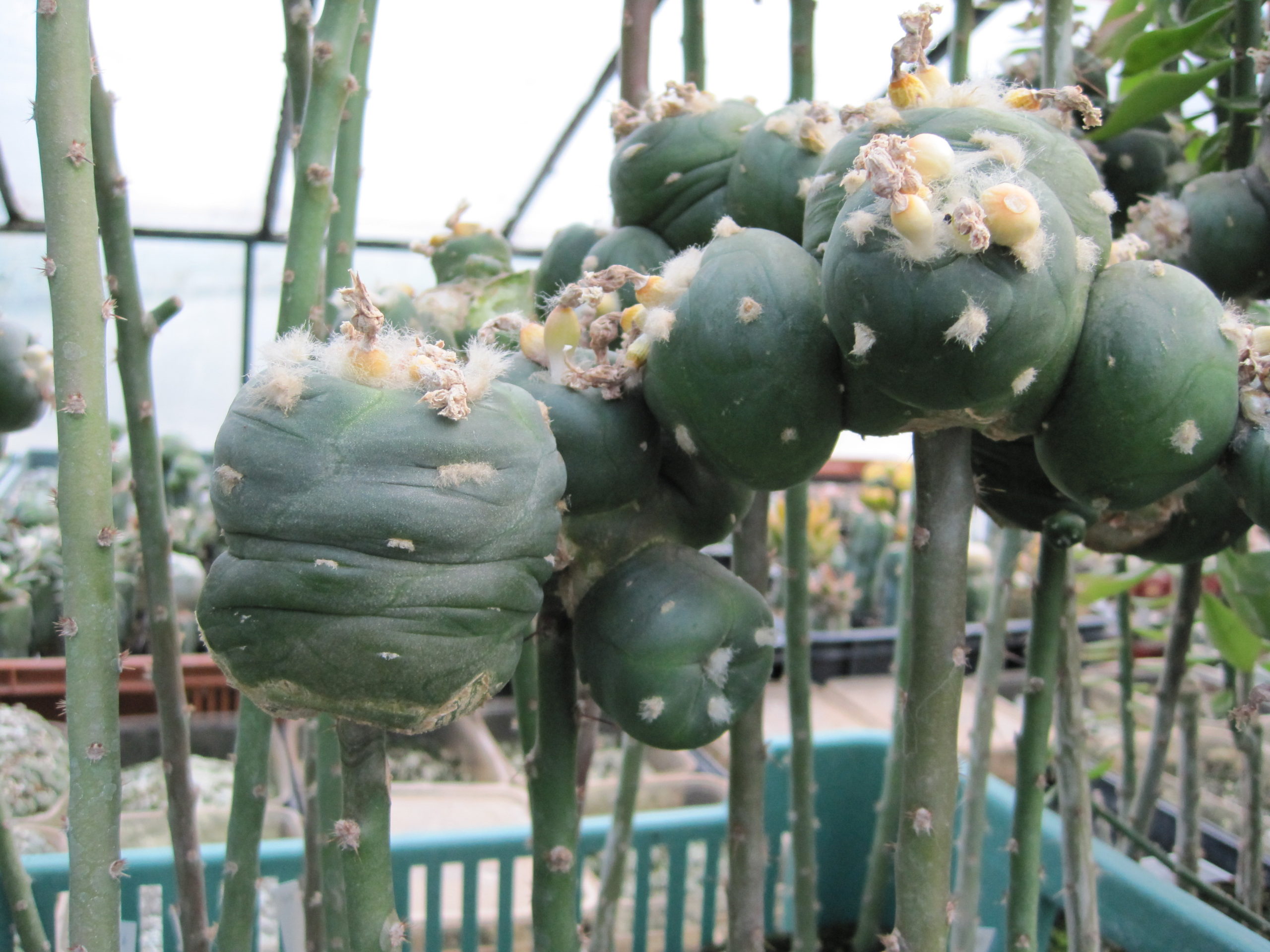
Is there a technique of harvesting that can help ensure the survival of the peyote plant?
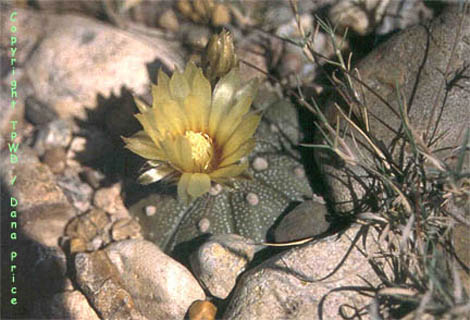
Summaries of Astrophytum/Lophophora papers published in 2006.
More recent Astrophytum/Lophophora papers.
2012 progress comments

2013 publications
2014 publications
2015 publications
Practical projects with direct implications
for active conservation.
PEYOTE HARVESTING
A field study of peyote harvesting and regrowth performed within its natural habitat.
Thanks to the generous support of a cactus conservationist this 4-year project became a published reality. The results appeared in print in a peer reviewed journal in 2011 and 2012 with a 2014 follow-up published in 2015. Our sincere thanks and deepest appreciation goes to Libbie Winston Mize for graciously supporting this important and timely study.
We are continuing to monitor this population every two years.
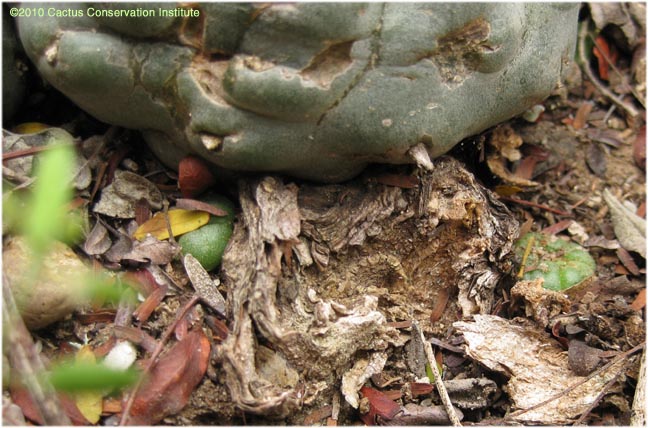
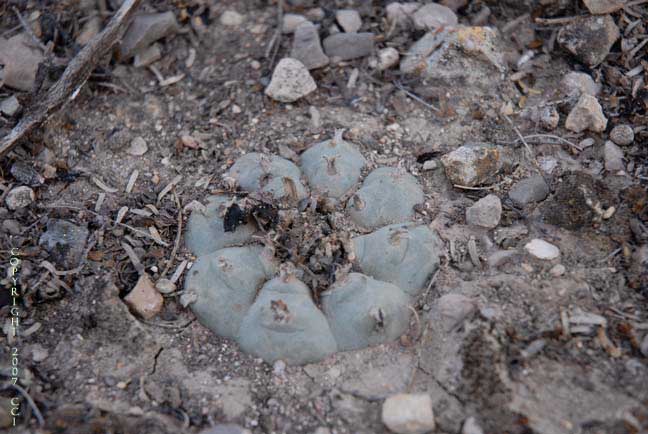
Regrowth on #106 in 2010 above & in 2011 on the upper right.
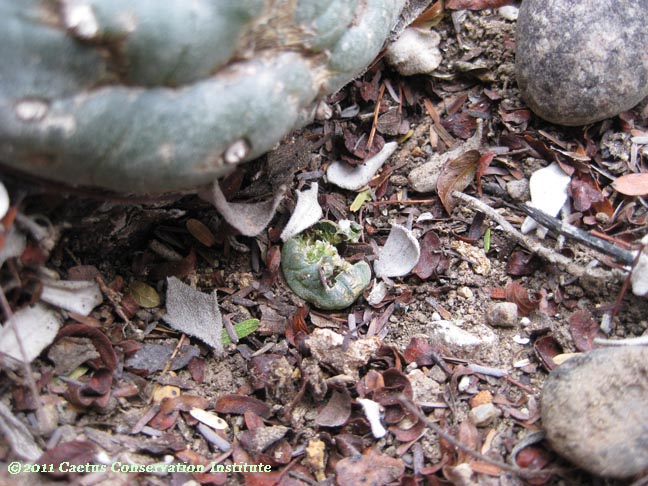
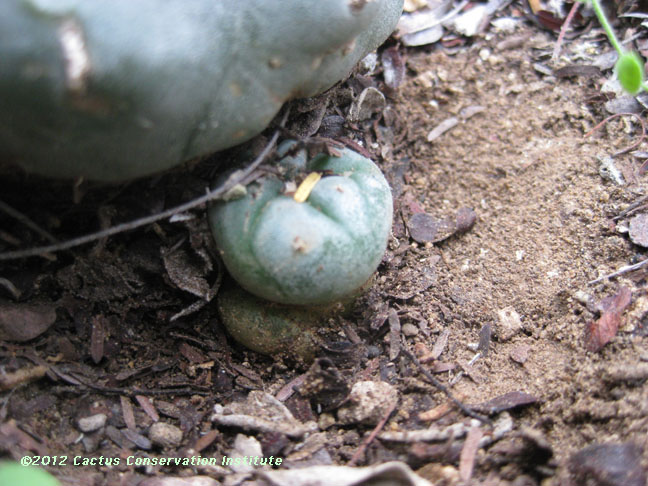
Regrowth on #106 in 2012 above & in 2014 on the lower right.
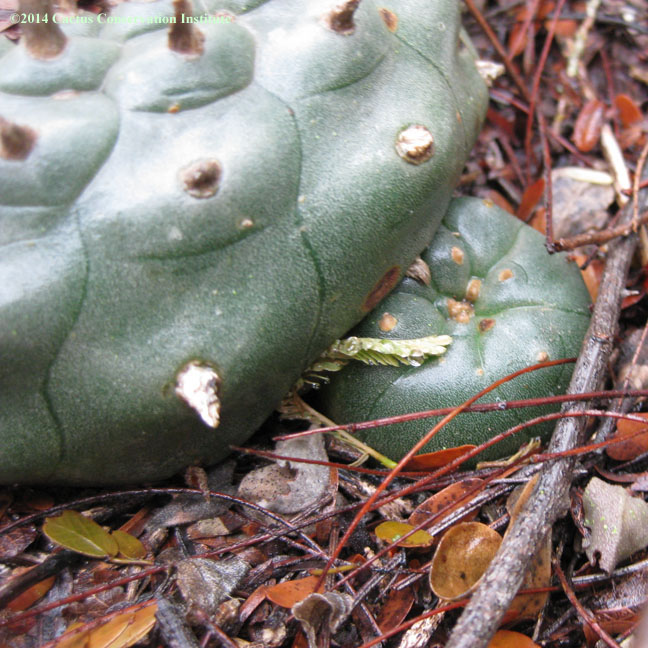
Four snapshots during 6 years of the life of a regrowth pup.
CULTIVATION OF PEYOTE
Cultivation of peyote is the ultimate solution to the conservation problem.
CCI’s cultivation suggestions are now available for the NAC. Contact Us
“If a person performs his duties as a keeper of the living medicine with the same care and reverence that he would bring to a peyote meeting – the same care and reverence with which he might tend the fire – then the medicine will reflect that care and that reverence to those who use it as the sacrament.”
Ted Herrera
Spiritual Leader
Rio Grande Native American Church
IDEAS FOR THE FUTURE
A field study of peyote production
Purpose:
To identify and demonstrate inputs/techniques to improve the production of peyote in its natural habitat.
Intended treatments:
(a) spot application of various types of fertilizers around individual plants.
(b) spot application of incremental amounts of water to individual plants during periods of drought.
(c) transplantation (of whole plants or cut crowns of plants) from areas of high density of plants to areas of suitable habitat with low density of plants.
(d) planting areas of low plant density with seed from plants of the same population.
(e) monitoring of sets of permanently identified individual plants to determine natural mortality rates and reproduction (recruitment) rates.
In each case, the effect of a given treatment would be determined by comparing the total production of peyote per acre with the treatment to the total production of peyote per acre without the treatment.
Projected expenses:
Since these studies will be done using volunteer labor and expertise, the majority of the cost of conducting such studies consists of the travel expenses for getting to and from the study sites.
A study of five-year duration (which is a beginning, and will provide preliminary data) will cost approximately $10,240 for the fieldwork.
Theoretical studies designed to increase our scientific knowledge of the cacti themselves.
1) A DNA study using genetic markers to address the taxonomic chaos in the genus Lophophora throughout its geographic range. This will involve both extensive fieldwork in northeastern Mexico and labwork at UNAM in Mexico City.
Preliminary data from the work of Dr. Terry and colleagues at Texas A&M showed that there was no observable variation in the genotypes at two microsatellite loci, either among individuals in a given population or even between two disjunct Chihuahuan Desert populations. The individuals from a Tamaulipecan Thornscrub population likewise had uniform genotypes, but they differed from those of the Chihuahuan Desert populations. Those results suggest that the genus comprising peyote cacti may be able to be broken down into distinguishable clusters of genetically similar/identical populations.
The results of this study, being conducted in collaboration with Dr. Héctor Hernández et al. at the National Autonomous University of México, should add to our understanding of how many species, subspecies or varieties of peyote there are in this genus that is so variable in its morphology.
2) A long-term study of the biogeography of peyote – to learn the extent of its natural geographic range and the common elements of its various natural habitats – will continue.
3) New metabolic & biochemical studies of peyote are needed (the original studies having been done mostly in the 1970’s).
Additional equipment, personnel and operational funding are needed to effect such studies.
New projects that are underway
We have also begun a molecular study of the known populations of the endangered Echinocereus fitchii ssp. albertii